
MODULE 1 – Pilot
Hypoglycemia – recognizing and treating low blood sugar
Use this to help explain low blood sugar during conversations with people who are newly diagnosed, or unsure of what to look for
Conversation tools for hypoglycemia
Use the visual resources to support conversations around hypoglycemia
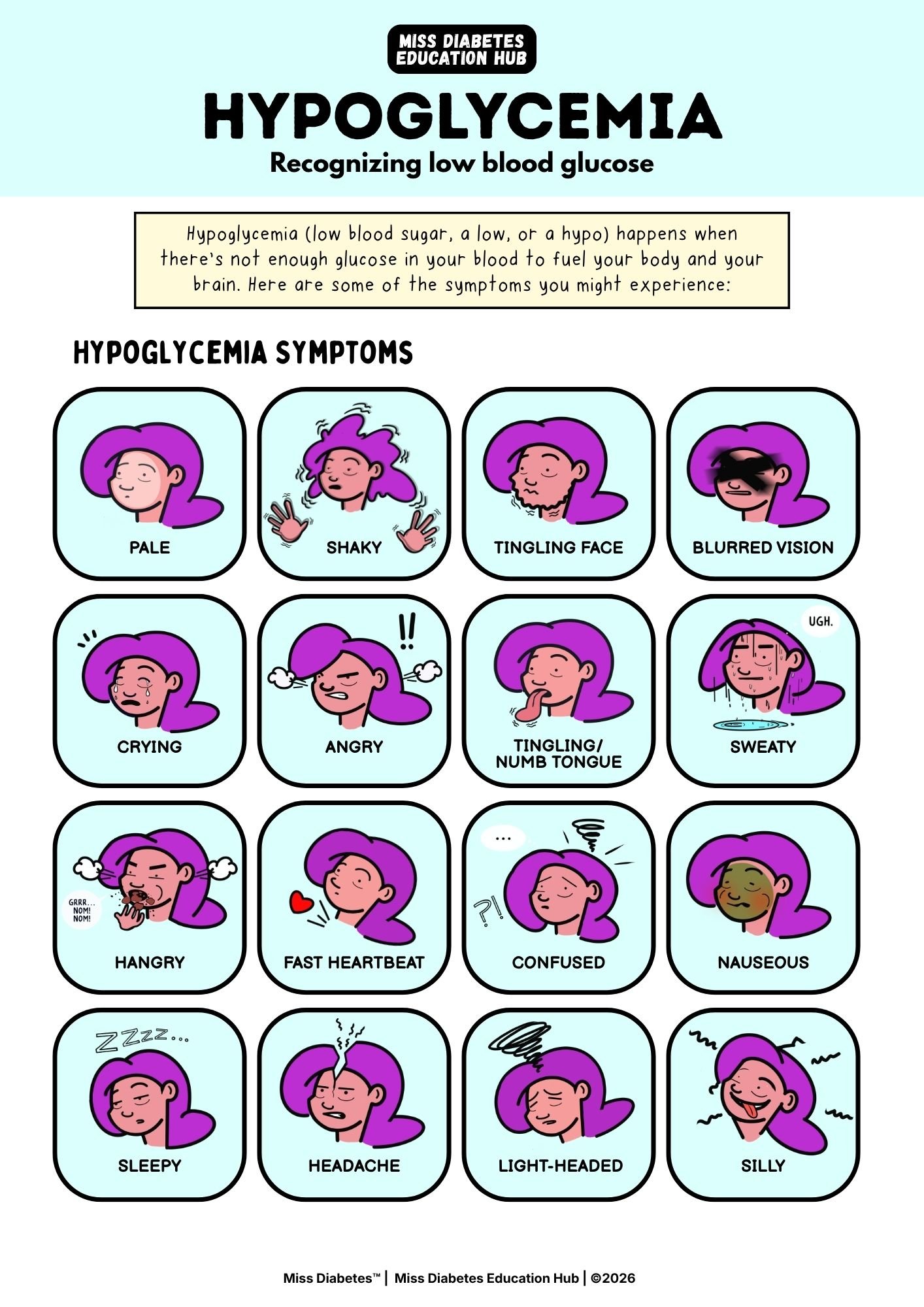
A4 Visual Guide (2 pages)
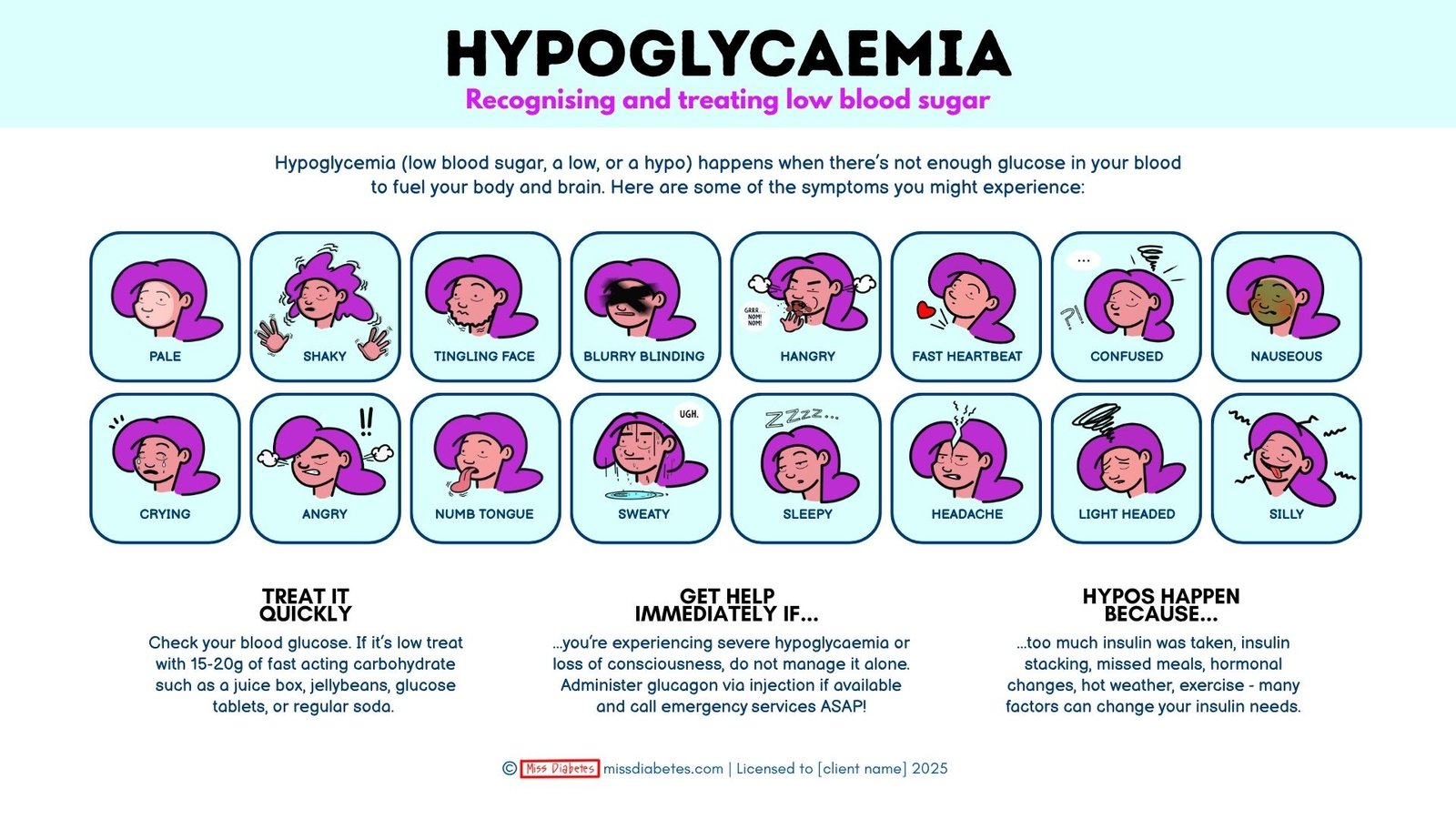
Presentation Slides (2 pages)
Educator Guide
When to use this visual
Use this visual during:
Purpose of this visual
This tool is designed to:
How to use it with parents
Step 1
Start with the top section and explain what hypoglycemia is in simple terms (low blood sugar).
Step 2
Move through the symptoms together. Point to each illustration and ask if any feel familiar.
Step 3
Pause and ask “Have you felt any of these before”? Allow space for them to connect to their own experiences.
Step 4
Highlight that symptoms can feel different each time
– Move through symptoms together
– Point to each illustration and ask if any feel familiar
Step 5
Move to “What to do” section about how to treat a hypo. Keep this practical and reassuring.
Step 6
End by reinforcing
– recognizing early signs = more control and confidence.
Key talking points
You can use language like: