
MODULE 1
Making sense of type 1 diabetes
Please read the guidelines of the module below before accessing the Teaching Tools.
Module Overview
“Making sense of type 1 diabetes” introduces the emotional, physical and practical realities of a new type 1 diabetes diagnosis through clear, visual storytelling.
This module helps patients – children, teens, adults and families understand:
Educators can use this module to guide gentle, structured conversations to reduce overwhelm and help patients feel seen, validated and supported.
This is a foundational module for the Miss Diabetes Education Hub.
All future modules build from the core concepts introduced here.
Learning Objectives
By the end of this module, patients and families will gain:
Understanding
- Explain in simple terms what type 1 diabetes is
- Understand why insulin is essential
- Recognize common symptoms and early experiences
- Describe the role of blood glucose monitoring
Emotional Support
- Identify common feelings after diagnosis
- Understand that distress, confusion or fear are normal
- Begin articulating questions or worries
- Recognize when and how to seek support
Confidence and Skills
- Begin using visual tools to remember key concepts
- Identify their care team and sources of guidance
- Feel more grounded in the early stages of diagnosis
- Build the mindset for long-term diabetes learning
Educator Goals
- Establish rapport and trust
- Use visual tools to simplfy complex ideas
- Normalize patient fears and worries
- Lay the foundation for future modules
Quick Session Guide
Every clinic is different. This module works whether you have 5 minutes, 15 minutes or a full session.
Option A – 5 Minute Micro Session
For rushed appointments, drop-ins, follow-ups or overwhelmed families.
Option B – 10-15 Minute Short Session
Option C – 20-30 Minute Short Session
For structured education or group sessions.
Clinical Alignment
This module has been developed to support people living with type 1 diabetes and their families. Content is aligned with the American Diabetes Association (ADA) Standard of Care in Diabetes – 2025 and the International Society for Pediatric and Adolescent Diabetes (ISPAD) Guidelines, ensuring consistency with evidence-based recommendations for diagnosis, treatment, monitoring, and self-management education.
Alignment to US Guidance
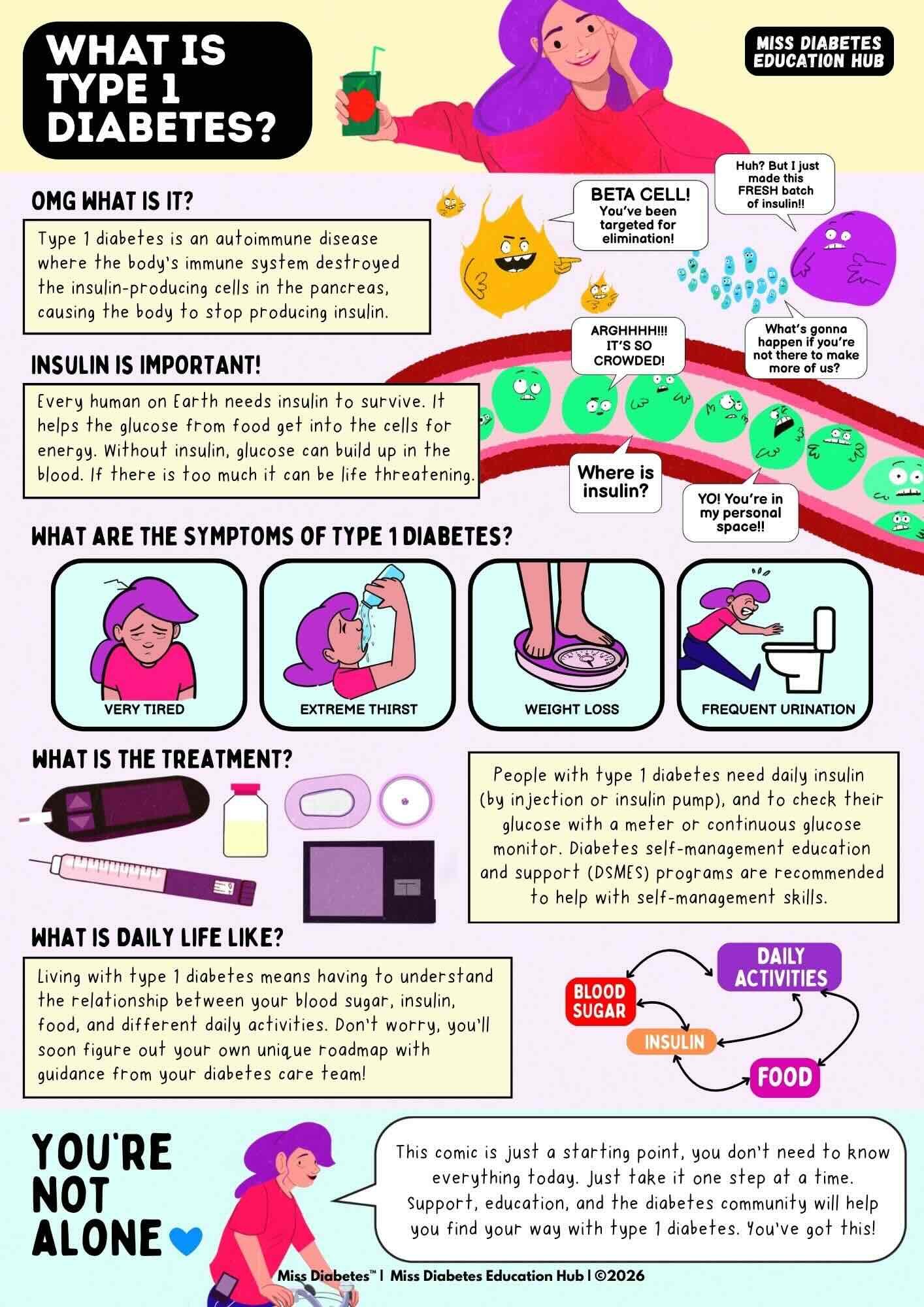
What is type 1 diabetes?
- Explains autoimmune cause, insulin dependence, symptoms of diagnosis.
- Aligned with ADA Standards of Care Section 5 (Diagnosis & Classification) and Section 6 (Glycemic Targets).
- Consistent with ISPAD recommendations for education at diganosis in children and adolescents.
Insulin explained
- Explains insulin action, glucose uptake, ketone risk.
- Aligned with ADA Section 9 (Pharmacologic Approaches to Glycemic Treatment).
- Consistent with ISPAD insulin therapy recommendations for pediatric type 1 diabetes.
Blood Sugar Basics
- Covers meters, CGMs, flash glucose monitoring, HbA1c.
- Aligned with ADA Section 6 (Glycemic Targets & Monitoring).
- ISPAD guidance on CGM/ SMBG use in children included.